Brown eggs vs white eggs is one of the most common food debates among health-conscious consumers. Many people assume brown eggs are healthier because they look more natural, while others believe white eggs are overly processed. In reality, egg color creates confusion that has little to do with nutrition.
This article explains the real difference between brown and white eggs, compares their nutrients, clears popular myths, and presents a specialist nutritionist’s view so you can choose eggs wisely based on health rather than appearance.
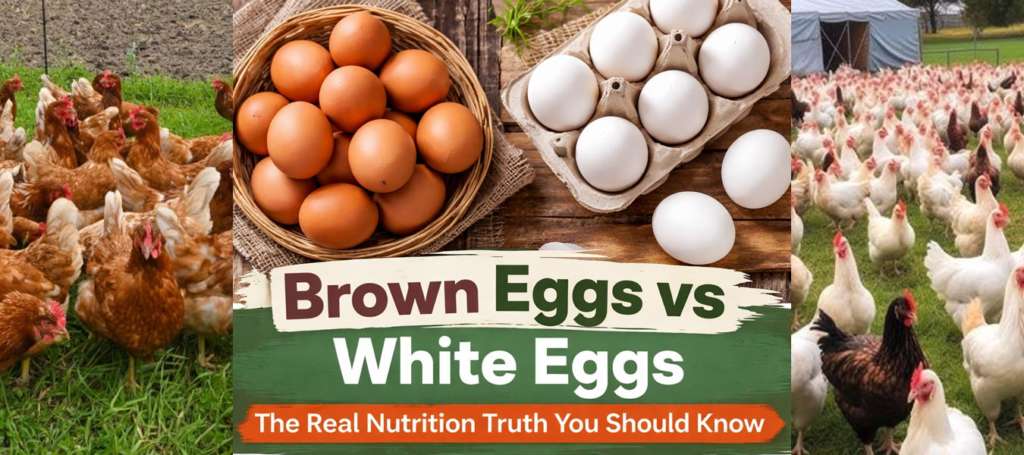
Brown eggs vs white eggs have nearly the same nutritional value. The shell color only depends on the hen’s breed, not on quality or health benefits. Nutritionists confirm that egg nutrition is influenced by the hen’s diet and farming method, not by whether the egg is brown or white.
What Determines Egg Color?
Egg shell color is decided by the breed of the hen, not by diet or farming style.
White eggs come from hens with white feathers and white earlobes.
Brown eggs come from red or brown-feathered hens with red earlobes.
The pigment is deposited during egg formation and has no impact on the egg’s nutritional value or quality.
Nutritional Value: Brown Eggs vs White Eggs
When produced under similar conditions, both eggs contain almost identical nutrients.
| Nutrient | Brown Eggs | White Eggs |
|---|---|---|
| Calories | Same | Same |
| Protein | Same | Same |
| Vitamin A | Same | Same |
| Vitamin D | Same | Same |
| Vitamin B12 | Same | Same |
| Iron | Same | Same |
| Fat | Same | Same |
| Cholesterol | Same | Same |
Any difference in nutrients depends on:
Hen’s diet
Exposure to sunlight
Farming practices
Not the shell color.

Does Egg Color Affect Taste?
No proven scientific evidence shows that shell color affects taste.
Taste depends on:
Feed quality (grains, greens, insects)
Freshness
Storage conditions
Cooking method
Fresh eggs from well-fed hens taste richer regardless of being brown or white.
Why Are Brown Eggs More Expensive?
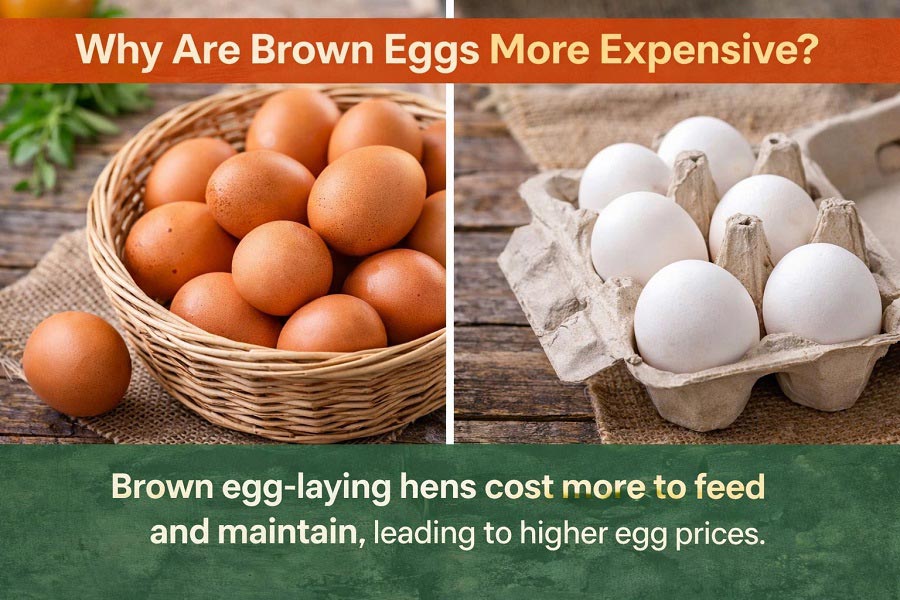
Brown eggs are often priced higher because:
Brown-egg hens are larger birds
They consume more feed
Higher feed consumption increases production cost
The higher price does not indicate higher nutrition.
Are Brown Eggs More Natural or Organic?
Shell color does not define whether eggs are:
Organic
Free-range
Cage-free
Pasture-raised
Both brown and white eggs can come from any farming system. Always check labels such as:
Free-range
Pasture-raised
Omega-3 enriched
Organic certified
Specialist Nutritionist View
According to registered nutrition specialists:
“Eggshell color has no relation to nutritional quality. What matters is the hen’s diet and lifestyle. Eggs from hens fed omega-3 rich feed or raised outdoors may contain higher levels of beneficial fats and vitamin D, regardless of shell color.”
From a nutritionist’s perspective:
Choose eggs based on farming method, not color
Prioritize omega-3 enriched or pasture-raised eggs
Ensure freshness
Store eggs properly to preserve nutrients
Health Benefits of Eggs (Any Color)
Both brown and white eggs provide:
Complete protein with all essential amino acids
Choline for brain development
Lutein and zeaxanthin for eye health
Vitamin D for bone strength
B vitamins for metabolism
Healthy fats for energy
Regular egg consumption supports:
Muscle repair
Weight control
Brain function
Immune health
Which Egg Is Better for Children and Elderly?
Both types are equally suitable for:
Growing children
Pregnant women
Elderly adults
Nutritional quality depends on:
Freshness
Source
Feed quality
Common Myths About Egg Color
Myth 1: Brown eggs are healthier
Fact: Nutrition depends on hen diet, not shell color
Myth 2: White eggs are artificial
Fact: White eggs are naturally produced by certain hen breeds
Myth 3: Brown eggs are organic
Fact: Organic status depends on certification
Myth 4: Brown eggs contain less cholesterol
Fact: Cholesterol levels are similar in both
Final Verdict
The debate of brown eggs vs white eggs is driven by perception rather than science. Both offer equal nutrition when produced under the same conditions. The real indicators of egg quality are:
Hen feed
Living conditions
Freshness
Storage
Shell color does not determine health benefits.
Whether you choose brown eggs or white eggs, you are getting the same powerful nutrition. Instead of focusing on color, pay attention to labels and source quality. Choose eggs from healthy hens raised under better farming practices.
In nutrition terms, quality matters more than color.
FAQs – Brown Eggs vs White Eggs
Q1. Are brown eggs healthier than white eggs?
No. Both contain similar nutrients. Health value depends on hen feed and farming method.
Q2. Do brown eggs have more protein than white eggs?
No. Protein content is nearly identical in both types.
Q3. Why do brown eggs cost more?
Brown-egg hens eat more feed, increasing production cost.
Q4. Are white eggs genetically modified?
No. White eggs come from naturally occurring hen breeds.
Q5. Which eggs are better for heart health?
Both are equal. Choose omega-3 enriched eggs for better heart benefits.
Q6. Are brown eggs safer than white eggs?
Safety depends on hygiene, storage, and freshness, not shell color.
Q7. Which eggs taste better?
Taste depends on freshness and hen diet, not shell color.
Q8. Are brown eggs more suitable for diabetics?
Both are equally suitable when consumed in moderation.
Q9. Can egg color affect digestion?
No. Digestibility is the same in both types.
Q10. Should I buy brown eggs or white eggs?
Choose based on farming method, quality, and budget—not color.